
GWR
A statistical technique that models spatially varying relationships, allowing for localized analysis of spatial data.
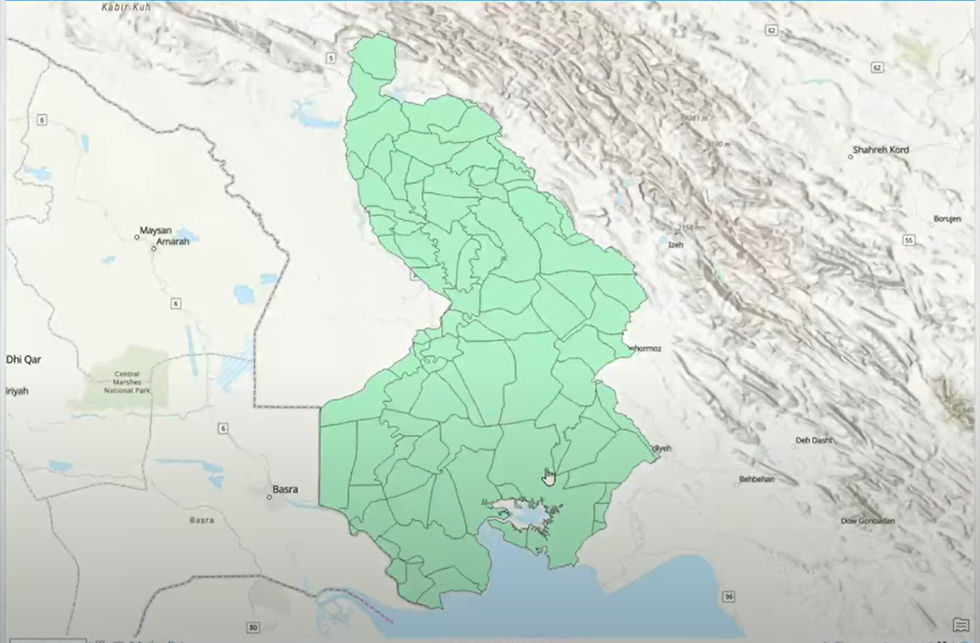_edited.jpg)
What does GWR tell us about?
A spatial analysis method called Geographic Weighted Regression (GWR) enables us to comprehend how correlations between variables vary depending on the location. GWR computes a local regression model at every place in the dataset, in contrast to ordinary regression, which yields a single global equation.
GWR informs us of:
Relationships that vary geographically (for example, how income influences property prices differently in different neighbourhoods)
Local trends and patterns that global models do not show
Geographical impact on the interactions of variables, increasing the accuracy of the model
Analysing patterns that change over space is particularly helpful in disciplines like economics, public health, environmental studies, and urban planning. Questions such as "Where is this relationship strongest or weakest?" and "How does geography influence the results?" are addressed by GWR.
For more information or any questions regarding our services, please don't hesitate to contact us at
Email: info@geowgs84.com
USA (HQ): (720) 702–4849
India: 9009471866 - Jay Sharma
Canada: (519) 590 9999
Mexico: 55 5941 3755
UK & Spain: +44 12358 56710
A spatial analytic technique called Geographically Weighted Regression (GWR) simulates how correlations between variables vary across different places. In fields like real estate, environmental studies, and urban planning, it is used to highlight regional trends.
Local patterns are revealed by the analysis of spatially variable interactions using Geographically Weighted Regression (GWR). It helps make focused decisions in the fields of public health, real estate, environmental research, and urban planning.
Geographically Weighted Regression (GWR) uses a single scale to model spatially variable connections. By enabling each variable to function at its own geographic scale, multiscale GWR (MGWR) enhances this and more precisely captures both local and wider patterns.
By permitting associations between variables to differ across geographic areas, local regression models—like Geographically Weighted Regression (GWR)—account for spatial variability. Local models demonstrate how determinants affect outcomes differentially in different places, in contrast to global models that presume uniform effects. In fields where spatial context greatly affects interactions, such as epidemiology, urban planning, and environmental research, this method is especially helpful.