
Habitat Corridors
Linear geographic features that connect separate habitats, supporting biodiversity and ecological processes by allowing species movement and gene flow.
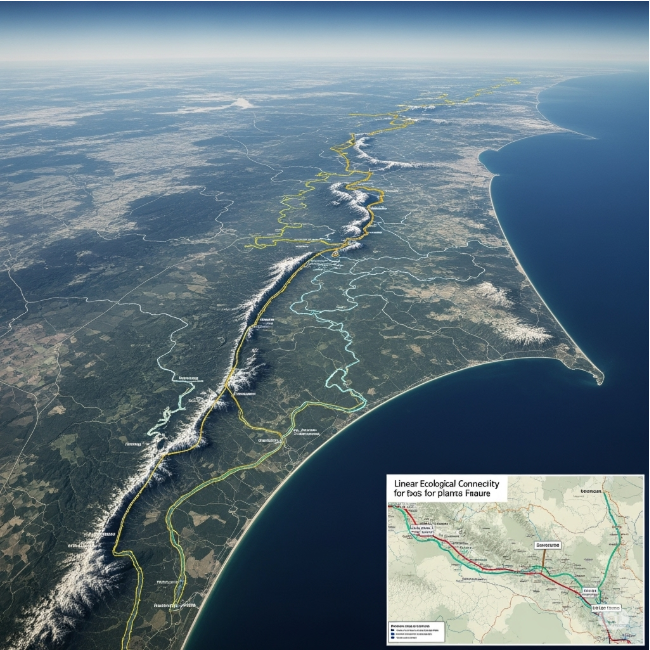
How do you define Habitat Corridors?
Natural or artificial routes known as "habitat corridors" link remote wildlife habitats and provide safe passage for plants and animals. These corridors lessen the detrimental impacts of habitat fragmentation brought on by human activities like highways and urbanization, preserve biodiversity, and promote genetic exchange.
They can be in many different forms, including:
Forestry strips between fields of crops
Wetlands or riverbanks
Wildlife-specific underpasses or overpasses
Habitat corridors are essential to conservation efforts and the long-term survival of many species because they make it easier for migratory, nesting, and resource access.
For more information or any questions regarding our services, please don't hesitate to contact us at
Email: info@geowgs84.com
USA (HQ): (720) 702–4849
India: 9009471866 - Jay Sharma
Canada: (519) 590 9999
Mexico: 55 5941 3755
UK & Spain: +44 12358 56710
Large, continuous habitats can become fragmented into smaller, isolated regions as a result of human activity like road construction, agriculture, and urbanization. By restricting access to food, mates, and shelter, this isolation impairs biodiversity, interferes with wildlife movement, and increases a species' risk of extinction.
Wildlife corridors allow animals to migrate, travel, and acquire resources in a safe manner by connecting fragmented habitats through natural or restored paths. In order for species to survive in changing settings, they facilitate genetic exchange between populations, preserve biodiversity, and lessen conflict between humans and wildlife.
The degree to which various habitat patches within a landscape are interconnected, permitting the movement of species, genes, and ecological processes, is referred to as landscape connectedness. While inadequate connectivity can result in habitat fragmentation and population reductions, high connectedness promotes biodiversity, species movement, and ecosystem resilience. It is a fundamental idea in landscape ecology and conservation planning.
Animals may cross roads and highways safely thanks to wildlife crossing infrastructure including tunnels, underpasses, and overpasses. By permitting the free movement of species across fragmented landscapes, these structures increase biodiversity, lessen vehicle-wildlife collisions, and preserve ecosystem connectivity. Human road safety and wildlife safety can be greatly enhanced by well-designed crossings, fencing, and signage.