
How Detailed Satellite Imagery Powers Modern GIS Applications
Spatial analysis, urban planning, environmental monitoring, and disaster management now rely heavily on Geographic Information Systems (GIS). Detailed satellite imagery, which offers high-resolution, multitemporal, and multispectral data for precise geographic insights, is the foundation of these systems. Without the accuracy and coverage that satellite imagery provides, modern GIS applications would be lacking.

The Role of Satellite Imagery in GIS
Digital geospatial systems and real-world phenomena are connected through satellite photography. Today's satellites can capture the Earth's surface at resolutions as fine as 30 cm per pixel thanks to developments in remote sensing. GIS analysts can model terrain, track ecosystems, and examine urban growth with previously unheard-of accuracy thanks to this level of information.
Important contributions consist of:
The production of base maps, digital elevation models (DEMs), and orthomosaics is supported by high-resolution mapping.
Change Detection: Enables analysts to identify changes in the shoreline, urban sprawl, or deforestation by comparing images taken at different times.
Beyond the visible spectrum, multispectral and hyperspectral data enable land-use classification, vegetation studies, and water quality monitoring.
Advantages of Detailed Satellite Imagery in GIS
Accuracy and Precision: Reliable results are ensured by high spatial resolution, which also lowers errors in spatial analysis.
Scalability: GIS databases are scalable since satellites cover large geographic areas at both regional and continental scales.
Temporal Coverage: Time-series data from frequent revisit cycles can be used to track changes almost instantly.
Integration with Other Data Sources: To provide reliable GIS datasets, satellite imagery can be integrated with LiDAR, IoT devices, and UAV data.
Key GIS Applications Powered by Satellite Imagery
Smart Cities and Urban Planning
To assess land usage, deploy infrastructure optimally, and create sustainable cities, urban planners depend on precise imaging. Transportation networks, zoning laws, and population density can all be modeled with the use of GIS layers created from satellite data.
Monitoring of the Environment
Wetland mapping, vegetation health assessments, and deforestation monitoring are made possible by multispectral photography incorporated into GIS. Analysts are able to evaluate agricultural conditions and biodiversity by employing indices like the Normalized Difference Vegetation Index (NDVI).
Risk assessment and disaster management
Satellite imaging offers real-time information during natural disasters like hurricanes, floods, and wildfires. This information is used by GIS platforms to map impacted areas, direct evacuation routes, and support recovery plans.
Precision farming and agriculture
Agronomists and farmers use satellite-based GIS programs to track irrigation trends, crop growth, and soil moisture. Higher yields and improved resource allocation are thus guaranteed.
Research on Climate Change
Long-term monitoring of glaciers, sea level rise, and atmospheric patterns is made possible by satellite images in GIS, which provides vital information for climate modelling.
Technologies Driving Modern Satellite-GIS Integration
High-Resolution Satellites: Systems such as ESA's Sentinel series, Airbus' Pleiades, 21AT, and Maxar's WorldView provide comprehensive geographic data.
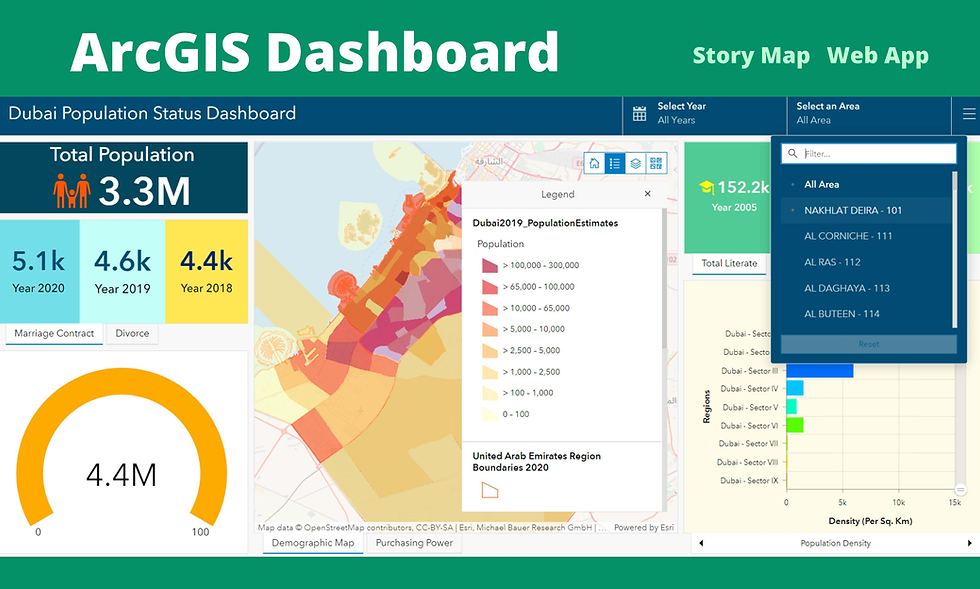
Cloud-Based GIS: Programs like Google Earth Engine and ArcGIS Online make it easy to combine analytical tools with satellite imagery.
Machine Learning & AI: AI applied to satellite data in GIS enables automated feature extraction, land cover classification, and predictive analytics through platforms such as GeoWGS84.ai
3D GIS and Digital Twins: LiDAR and satellite photos combine to produce lifelike 3D city models for urban planning and simulation.
Future of Satellite Imagery in GIS
Higher temporal resolution, analytics driven by AI, and near real-time geospatial intelligence are key components of the future of GIS. Future constellations like PlanetScope and next-generation hyperspectral satellites will provide greater datasets for GIS applications to use in addressing global issues.
The capabilities of GIS have been broadened by detailed satellite photography. It offers the accuracy, scope, and timeliness required by contemporary geospatial applications, ranging from disaster response and climate monitoring to urban development and agriculture. GIS will provide even more profound insights as satellites develop further, enabling more intelligent decision-making and a more sustainable future.
For more information or any questions regarding satellite imagery in GIS applications, please don't hesitate to contact us at
Email: info@geowgs84.com
USA (HQ): (720) 702–4849
(A GeoWGS84 Corp Company)


Comments