top of page
GeoWGS84AI_Logo_edited.jpg
  • Page 11

GIS Glossary

Looking to master GIS? This comprehensive GIS glossary covers essential GIS terms and definitions, perfect for both beginners and professionals. Explore the most important geospatial terminology, from spatial data terms and mapping terminology to advanced topological concepts in GIS. Whether you're diving into remote sensing, LiDAR, cartography, or GeoAI, our geospatial dictionary and GIS vocabulary reference help you understand the language of geographic information systems. Discover commonly used GIS acronyms and meanings, get a quick geo terms cheat sheet, and unlock the full GeoTech lexicon used in urban planning, environmental analysis, and earth observation. Stay ahead in the field with this up-to-date GIS glossary 2025, your go-to guide to GIS lingo explained for smart data analysis and decision-making.

Observation

Observation

Start Now

A recorded measurement or event at a specific location and time, forming the basis for spatial analysis and modelling (inferred from standard GIS usage).

Offset

Offset

Start Now

A specified distance used to create parallel features or to buffer spatial features for analysis (inferred from standard GIS usage).

Organic Layout

Organic Layout

Start Now

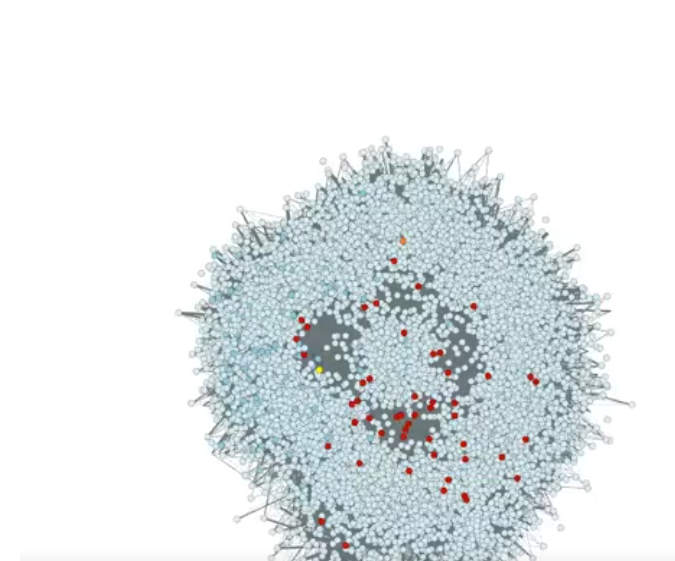
In network or link analysis, a visual arrangement of entities that emphasizes node connections, helping to reveal spatial or relational patterns.

Orientation

Orientation

Start Now

The angle or direction at which a spatial feature (such as a symbol, line, or text) is positioned relative to a reference direction, often north. Orientation is important for interpreting spatial relationships and map design.

Orthophotograph

Orthophotograph

Start Now

An aerial photograph that has been geometrically corrected (orthorectified) so that the scale is uniform and can be used as a map. Orthophotos are foundational for accurate spatial analysis and base mapping.

Overlay

Overlay

Start Now

A core spatial analysis operation in which two or more map layers are superimposed to identify relationships, intersections, or combined attributes between features. Overlay analysis is fundamental for tasks such as suitability modelling and impact assessment.

P-value

P-value

Start Now

In spatial statistics, a measure used to determine the significance of spatial patterns or relationships.

Pan

Pan

Start Now

The action of moving the visible area of a map display without changing the scale or orientation.

Pan Sharpening

Pan Sharpening

Start Now

A process that merges high-resolution panchromatic and lower-resolution multispectral imagery to create a single high-resolution colour image

Panchromatic Image

Panchromatic Image

Start Now

A single-band image capturing a wide range of wavelengths, often used in remote sensing for its high spatial resolution.

Panel Map

Panel Map

Start Now

A map composed of several adjoining sheets or panels, used for displaying large geographic areas at detailed scales.

Parallax

Parallax

Start Now

The apparent shift in an object’s position when viewed from two different angles, important in photogrammetry for deriving elevation and depth.

Path

Path

Start Now

In network analysis, a sequence of connected edges or lines representing a route between locations (inferred from standard GIS usage).

Pixel

Pixel

Start Now

The smallest unit of a raster dataset, representing a single value for a specific area on the ground (inferred from standard GIS usage).

Point

Point

Start Now

A zero-dimensional spatial feature representing a single location, such as a well, tree, or address (inferred from standard GIS usage).

Point Density

Point Density

Start Now

A spatial analysis method that calculates the concentration of point features within a specified area, often used for hotspot analysis (inferred from standard GIS usage).

Polygon

Polygon

Start Now

A vector feature representing a closed area defined by a sequence of connected lines, used for mapping regions such as lakes, parcels, or administrative boundaries.

Polygon Overlay

Polygon Overlay

Start Now

A spatial analysis technique where multiple polygon layers are combined to identify intersections, unions, or differences between areas (inferred from standard GIS usage).

Polyline

Polyline

Start Now

A one-dimensional vector feature composed of straight line segments, used to represent linear features like roads or rivers (inferred from standard GIS usage).

Precision

Precision

Start Now

The level of detail and exactness of spatial data measurements, important for ensuring reliable analysis (inferred from standard GIS usage).

bottom of page